
Saskatchewan's Vanishing Prairies: How Much Native Grassland Is Left, and What Have We Lost?
I'll admit that I've been guilty of overlooking Saskatchewan myself.
Much of my work focuses on the relationship between nature, human health and the places we live. But when I think about environmental loss in Canada, my mind jumps to the forests of British Columbia or the rapid urban expansion of southern Ontario. Saskatchewan rarely enters the conversation, and I suspect I'm not alone.
There's a concept in environmental psychology called plant awareness disparity, sometimes referred to as plant blindness. It describes our tendency to overlook plants and the ecological importance of vegetation, particularly when compared with animals. I wonder whether something similar happens at the landscape level. We recognize the loss of a towering forest, but what about a prairie that’s been ploughed? Maybe a wetland that's been drained or a grassland that's disappeared over generations?
That realization is what prompted me to look more closely at the central province. How much of its original landscape is actually left? And what have we lost, ecologically and otherwise, without fully appreciating it?
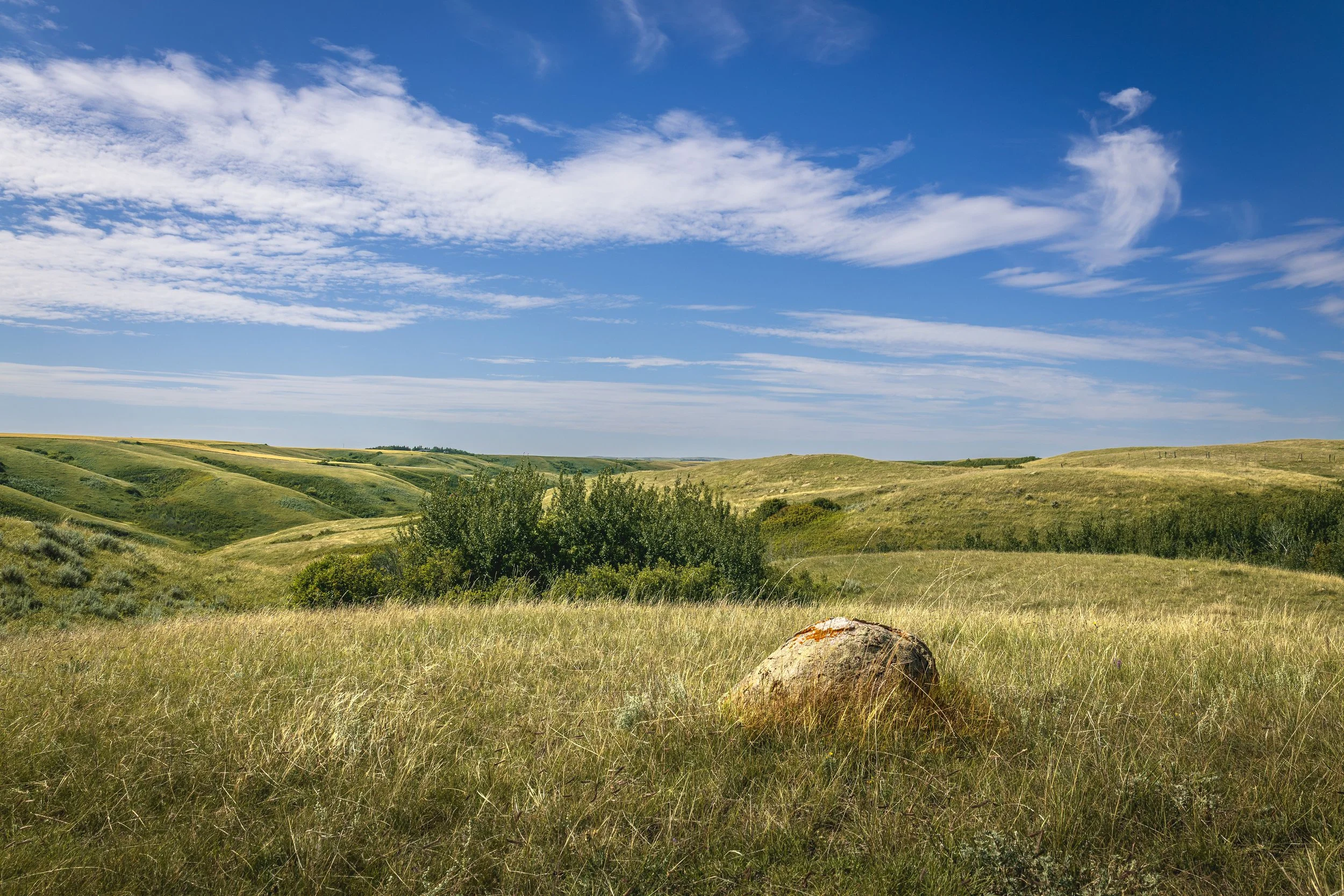
Photo by Jola Kedra: https://www.pexels.com/photo/scenic-view-of-grasslands-in-saskatchewan-35698177/
When Canadians think about the loss of natural landscapes, certain images come to mind…
The towering old-growth forests of British Columbia being cleared. New subdivisions spreading across Ontario's once-productive farmland. Highways and industrial developments cutting through familiar landscapes. But there's another environmental story that rarely seems to command the same national attention.
Saskatchewan.
Drive across southern Saskatchewan and you'll encounter seemingly endless fields of wheat, canola and pasture, stretching toward a horizon that feels impossibly far away. It's beautiful country. Productive, too. And at first glance, it hardly looks like a landscape that has experienced extensive ecological degradation. But there's a contrast between a landscape that is green (and gold) and one that remains ecologically intact. Much of Saskatchewan's natural prairie has disappeared. And because the original ecosystem was largely composed of grasses, wildflowers, wetlands and scattered shrubs rather than towering trees, that loss has been remarkably easy to overlook.
We're accustomed to recognizing deforestation. Perhaps it's time we paid closer attention to what happens when an entire grassland ecosystem is terraformed.
How Much of Saskatchewan's Native Prairie Is Actually Left?
The numbers are sobering.
In 2025, Saskatchewan released its Prairie Landscape Inventory, the result of seven years of work mapping native grassland across the province's Prairie Ecozone. The assessment estimated that native grassland now covers approximately 16% of that landscape.[1] That figure is a measure of current land cover, rather than a direct calculation of how much original prairie was destroyed. Nevertheless, it illustrates just how thoroughly the province's southern ecosystems have been transformed.
Unsuprisingly, the losses have also been uneven. Researchers at the University of Saskatchewan estimate that only 1–5% of native grasslands remain on some of Canada's most fertile prairie soils. The very characteristics that made these landscapes exceptional ecosystems also made them attractive for cultivation.[2]
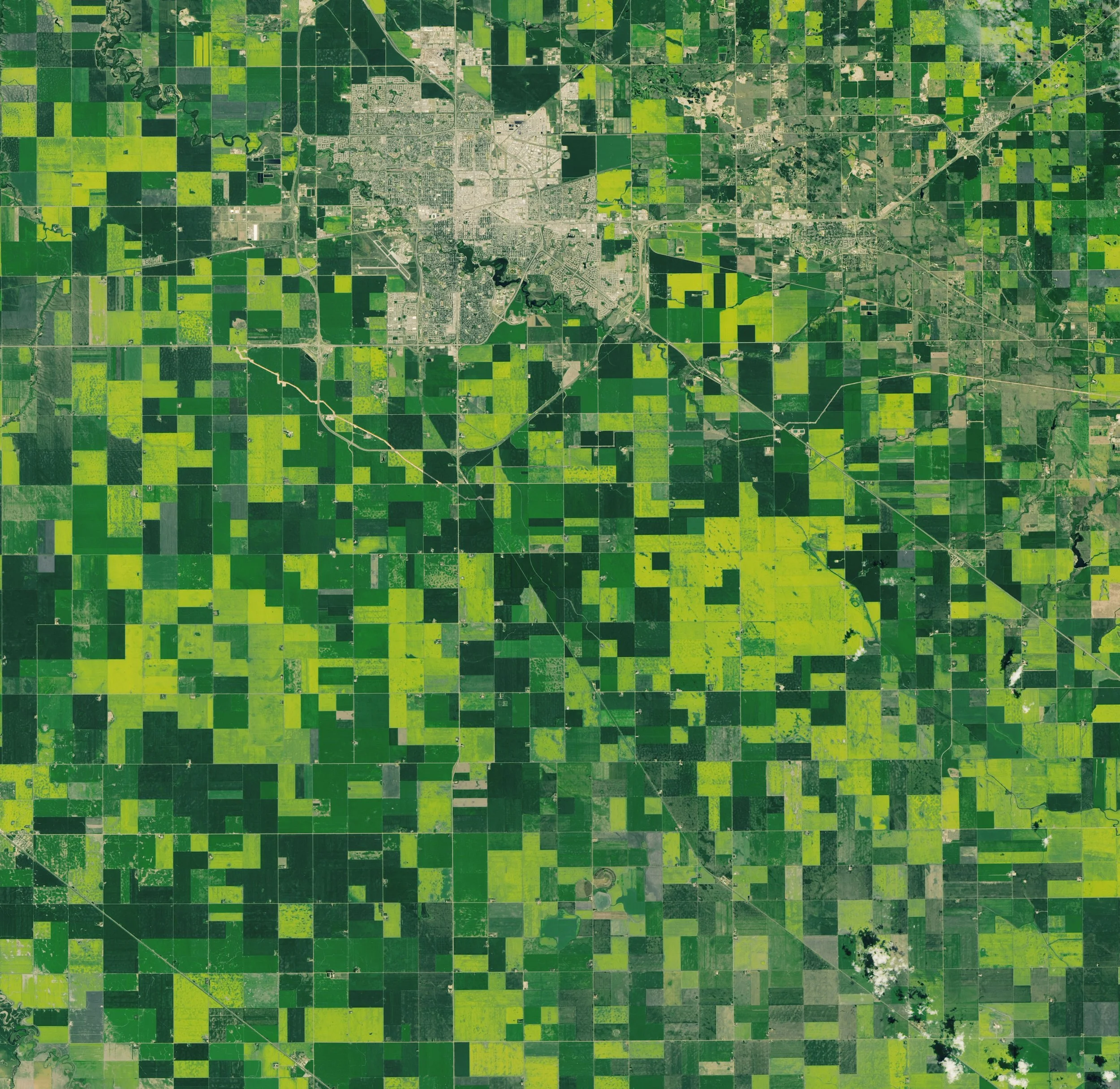
NASA Earth Observatory images by Lauren Dauphin, using Landsat data from the U.S. Geological Survey and MODIS data from NASA EOSDIS/LANCE and GIBS/Worldview.
To understand what happened, we need to appreciate that Saskatchewan was never one uniform landscape.
Its northern regions contain broad swaths boreal forests, interwoven with lakes and wetlands. Moving south, these transition into aspen parkland, where patches of woodland historically mixed with grassland. Farther south, the vast mixed-grass prairie developed in response to a relatively dry climate, periodic fire and grazing by large herbivores.
These grasslands were never supposed to be forests.
They were complex ecosystems in their own right, shaped over thousands of years by climate, bison, fire and Indigenous land stewardship.[3] Beginning in the late nineteenth century, agricultural settlement transformed much of this landscape. Native vegetation was cleared and ploughed, wetlands were altered, and a patchwork of cultivated fields and fenced pastures fragmented ecosystems that had once extended across enormous areas. The agricultural productivity that followed has contributed enormously to Saskatchewan's economy and Canada's food supply.
But that transformation also came with ecological costs that are only now being more fully appreciated.
The Disappearing Landscape Beneath Our Feet
One of the most overlooked characteristics of native prairie is how much of its ecological activity happens underground.
A healthy grassland is supported by an intricate network of roots, fungi, microorganisms and soil organisms. Many prairie plants develop deep, extensive root systems that help them survive drought, while simultaneously stabilizing soil and cycling nutrients. Over generations, those plants also help build exceptionally rich soils. It's one of the reasons Saskatchewan became such an important agricultural region in the first place.
But cultivating prairie changes the relationship between plants and soil.
When perennial native vegetation is replaced by annual crops, the soil experiences changes in root structure and organic matter inputs. Historical cultivation practices, particularly repeated tillage and summer fallow, contributed to erosion and losses of soil organic matter. The Dust Bowl of the 1930s remains one of the clearest examples of what can happen when drought meets vulnerable agricultural soils. Saskatchewan experienced severe wind erosion, with fertile topsoil carried away during dust storms.[4]
Fortunately, agricultural practices have evolved substantially. Saskatchewan has become a leader in reduced-tillage and zero-tillage systems, which help preserve moisture, reduce erosion and rebuild soil organic matter. These improvements deserve recognition. But healthier cropland and intact native prairie are not ecologically interchangeable. A cultivated field can support productive soils and some wildlife habitat. What it cannot readily recreate is the full complexity of an established native grassland, its diverse flora and fauna having developed over millennia.
What Happens to Wildlife When the Prairie Disappears?
Consider the birds.
According to The State of Canada's Birds 2024, grassland bird populations have declined by approximately 67% nationally since 1970. Among species that depend specifically on native grasslands, the decline has been even greater, reaching approximately 90%.[5] Now, these are Canadian population trends, not estimates specific to Saskatchewan. That said, the province contains important breeding habitat for many of the species affected. Birds such as Sprague's pipits, chestnut-collared longspurs, burrowing owls and ferruginous hawks depend on the ecological characteristics of prairie habitats.
For most, a monoculture field of wheat simply isn't an adequate substitute. Native grasslands provide nesting structure, food sources, protection from predators and habitat conditions that vary across seasons. When these landscapes are bifurcated again and again, suitable habitats are suddenly separated by large expanses of cropland, roads and development.
And the implications extend beyond individual species.
Saskatchewan sits within an important continental network of breeding grounds and migratory pathways. The province's wetlands support migratory waterfowl, while its grasslands provide seasonal habitat for birds travelling across North America. The historical migrations of large mammals have also been dramatically altered. Millions of plains bison once moved across the Great Plains, shaping vegetation through grazing, trampling and nutrient cycling. Their near-extirpation in the nineteenth century fundamentally changed prairie ecology.
Today, pronghorn continue to depend on seasonal movement across southern Saskatchewan and neighbouring jurisdictions. In January 2026, the provincial government announced new efforts to identify and protect their migration corridors, recognizing that roads, fencing and other human activities can interrupt these routes.[6] It's a reminder that wildlife conservation cannot be reduced to protecting isolated parcels of land. Animals move. Water moves. Ecological relationships cross property lines and political borders.
Our conservation strategies must account for that.
The Missing Connection Between Prairie, Water and Climate
There's another dimension to this story that is particularly relevant as Saskatchewan faces a changing climate.
Native grasslands are important stores of carbon, particularly in their soils and root systems. When grassland is converted, that long-established carbon storage can be disrupted.[7] Healthy grasslands also help regulate water movement, maintaining soil structure to reduce vulnerability to erosion.
And intertwined with Saskatchewan's prairies are the wetlands of the Prairie Pothole Region. These shallow depressions collect snowmelt and precipitation, providing breeding habitat for waterfowl while slowing runoff and retaining water within the landscape. Their condition matters enormously for biodiversity and water management. Interestingly, newer Saskatchewan Water Security Agency data complicate the often-repeated claim that most of the province's wetlands have been drained. Its recent inventory estimates that approximately 14% of mapped pothole wetland area has been drained, although additional wetlands have been farmed or otherwise altered.[8]
That divergence is interesting because wetland retention and wetland health are not the same thing. A wetland may remain physically present while undergoing alterations in surrounding ecoservices. As droughts, floods and temperature extremes become more consequential, maintaining these ecological systems is critical to agricultural and rural resilience.
There's also an important connection to human health. Soil degradation, water availability, extreme weather and biodiversity loss influence the conditions in which people live and work. Agricultural livelihoods, food production and community well-being are tied to ecological systems that are sometimes treated as separate from public health.
In my work connecting nature and health, I often return to the idea that the environment is not just the backdrop against which our health unfolds. It's the main system supporting it.
Why Don't We Talk About Prairie Conservation More?
I couldn't really answer this question when I started writing. But the more I thought about it, the more I kept coming back to a concept I've explored in my work before. Environmental generational amnesia.
First described by environmental psychologist Peter Kahn, the idea is that each generation develops its understanding of what a healthy natural environment looks like based largely on the world it experiences growing up. As ecosystems become progressively degraded, we gradually adjust our expectations of what is normal.[9] Researchers also call this shifting baseline syndrome. In a 2018 review, Soga and Gaston explained how our collective expectations of environmental conditions can decline over time, particularly when we lack knowledge or firsthand experience of what existed before.[10]
Think about what that means for Saskatchewan.
For generations, the cultivated prairie has represented prosperity and the extraordinary resilience of farming communities. Fields of golden wheat and bright yellow canola have become synonymous with the province itself. They're the landscapes we see in tourism campaigns, photographs and even our national imagination. And rightly so. Agriculture has shaped Saskatchewan's communities, economy and identity in profound ways. But here's the question I've been wrestling with. If the agricultural landscape is all we've ever known, how would we recognize what's missing?
Interestingly, researchers have explored this very question in Saskatchewan.
In a study published in The Canadian Geographer, researchers examined the conservation of native grasslands within Saskatchewan's Prairie Pastures Conservation Area. Through interviews with people familiar with the former federal community pasture system, they identified concerns that declining public access to native prairie could contribute to a loss of ecological knowledge and appreciation. One participant described how people had become so disconnected from native grasslands that they associated the word prairie with images of canola fields rather than the original ecosystem.[11]
I personally found that observation striking. We've become so accustomed to the transformed landscape that we sometimes use the same word to describe both what was there before and what replaced it. Of course, this doesn't mean that people living and working in Saskatchewan are unaware of the province's ecological history. Indigenous communities have maintained relationships with these landscapes across generations, while ranchers, naturalists and conservation organizations continue to protect and share knowledge of the remaining prairie. But it does raise an uncomfortable possibility. Perhaps some of our environmental losses receive less attention simply because they happened before most of us were around to witness them. And when a landscape changes gradually enough, each generation inherits a diminished version without fully appreciating the difference.
One could argue that it's difficult to advocate for the protection of something we don't recognize as missing. Still, acknowledging the importance of prairie conservation shouldn't turn this into a simplistic conversation about farming versus nature.
Many of Saskatchewan's remaining native grasslands survive precisely because ranchers have maintained them as grazing lands rather than converting them to annual crops. Well-managed grazing can support grassland biodiversity, vegetation structure and ecological processes, although the outcomes depend on grazing intensity and timing. In many ways, ranchers can be important stewards of the very ecosystems we're trying to protect.
Protecting What We Have Left
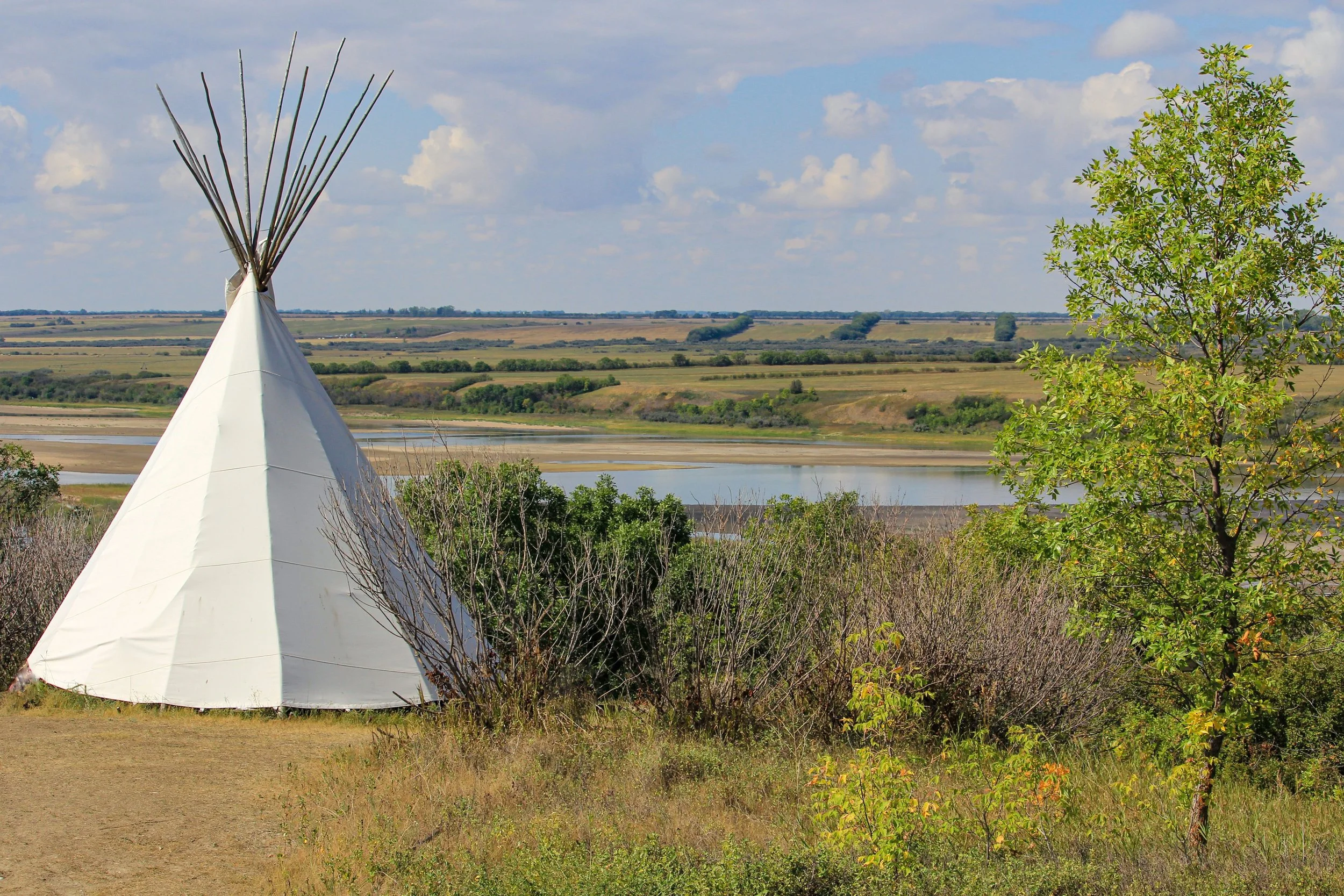
Places such as Grasslands National Park offer a glimpse of what the southern landscape once looked like, with its remarkable diversity of native plants, wildlife and ecological relationships.[12] But protected areas alone cannot sustain every species and ecological process. What remains of the prairie extends across working landscapes, private lands, Indigenous territories and fragmented habitat networks. Protecting it requires collaboration among governments, Indigenous Nations, ranchers, farmers, researchers and conservation organizations.
And perhaps it requires a change in how we see the landscape in the first place. When we look at a forest, many of us instinctively understand that the trees represent something worth protecting. The age of the trees and the wildlife living among them make their absence visible. Prairies asks us to look a little closer. To notice the grasses growing beneath our feet. The birds nesting where we might otherwise see an empty field. The soil that has accumulated carbon over centuries. The wetlands that hold water during spring runoff. The migratory paths connecting Saskatchewan to ecosystems thousands of kilometres away.
There is an enormous amount of history contained within an apparently ordinary patch of prairie. We cannot reverse every change made to Saskatchewan's landscape over the past century and a half. But we can become much more deliberate about protecting what remains.
After all, an ecosystem doesn't need towering trees to be worth saving.
References
Government of Saskatchewan. (2025, June 16). Recognizing Native Prairie Appreciation Week in Saskatchewan. https://www.saskatchewan.ca/government/news-and-media/2025/june/16/recognizing-native-prairie-appreciation-week-in-saskatchewan
Paulson, J. (2026, January 7). USask AgBio research: Saving prairie grasslands. College of Agriculture and Bioresources, University of Saskatchewan. https://agbio.usask.ca/news/2026/01/usask-agbio-research-saving-prairie-grasslands.php
Redmann, R. E. (n.d.). Grasses and grasslands, native. Indigenous Saskatchewan Encyclopedia. University of Saskatchewan. https://teaching.usask.ca/indigenoussk/import/grasses_and_grasslands_native.php
Government of Saskatchewan. (n.d.). From dust to durability: A Saskatchewan story of soil stewardship. https://www.saskatchewan.ca/business/environmental-protection-and-sustainability/resilience-reporting/resilience-stories/natural-systems/from-dust-to-durability
Birds Canada, & Environment and Climate Change Canada. (2024). The state of Canada's birds report. https://doi.org/10.71842/8bab-ks08
Government of Saskatchewan. (2026, January 28). Keeping Saskatchewan's pronghorn on the move: New efforts to preserve migration corridors. https://www.saskatchewan.ca/government/news-and-media/2026/january/28/keeping-saskatchewans-pronghorn-on-the-move-new-efforts-to-preserve-migration-corridors
Arora, V. K., Johannessen, S. C., Christian, J. R., Humphreys, E., Ianson, D., Melton, J. R., Nassar, R., & Zickfeld, K. (2026). The role of the carbon cycle in climate change. In Canada's changing climate report 2026. Government of Canada. https://www.canada.ca/en/environment-climate-change/services/science-technology/changing-climate-report-2026/cccr-chapter-9-en.html
Water Security Agency. (n.d.). Wetlands & agricultural water management in Saskatchewan. https://wsask.ca/ag-water-management/agriculture-water-management/agricultural-water-stewardship-policy/wetlands-agricultural-water-management-in-saskatchewan/
Kahn, P. H., Jr. (2002). Children's affiliations with nature: Structure, development, and the problem of environmental generational amnesia. In P. H. Kahn, Jr., & S. R. Kellert (Eds.), Children and nature: Psychological, Sociocultural, and Evolutionary Investigations (pp. 93–116). MIT Press.
Soga, M., & Gaston, K. J. (2018). Shifting baseline syndrome: Causes, consequences, and implications. Frontiers in Ecology and the Environment, 16(4), 222–230. https://doi.org/10.1002/fee.1794
Hisey, F., Heppner, M., & Olive, A. (2022). Supporting native grasslands in Canada: Lessons learned and future management of the Prairie Pastures Conservation Area (PPCA) in Saskatchewan. The Canadian Geographer / Le Géographe canadien, 66(4), 683–695. https://doi.org/10.1111/cag.12768
Parks Canada Agency. (2022). Grasslands National Park of Canada management plan, 2022. https://parks.canada.ca/pn-np/sk/grasslands/info/plan/plan-2022