The Science of Nature Exposure
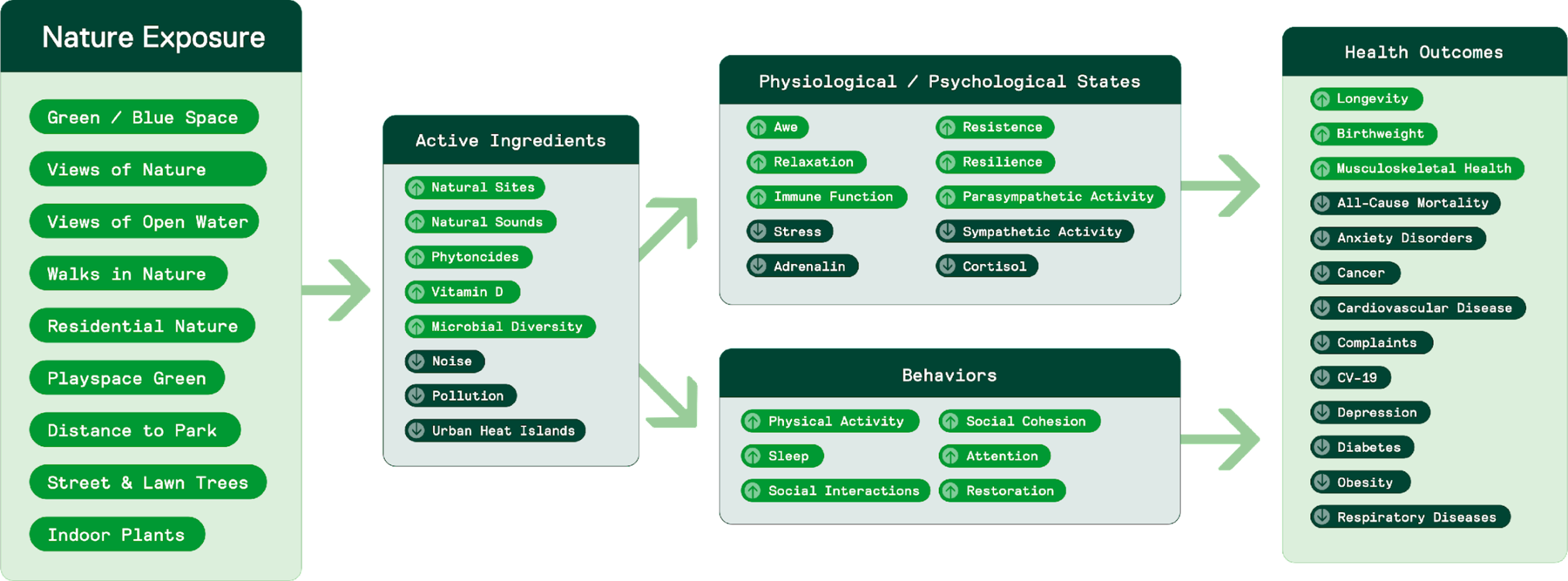
Nature exposure is not one biological pathway. It is many.
Your body is constantly reading the environment. When we step outside, the body encounters changes in light, sound, temperature, air chemistry, microbial diversity and visual complexity. Our eyes detect daylight. Our brains process natural scenes. Our autonomic nervous system responds to perceived safety and stress. Our lungs encounter compounds released by plants. Our skin comes into contact with environmental microorganisms. Increasingly, researchers are measuring what happens next.
Photo by Kayla Watson.
Visual System
Nature begins at the eye. Specialized retinal cells called intrinsically photosensitive retinal ganglion cells, or ipRGCs, contain melanopsin and respond to environmental light. These cells send signals toward the brain's master circadian clock, helping synchronize biological rhythms with day and night. Human field research has linked greater outdoor and daytime light exposure with differences in melatonin timing and sleep-related physiology. [1,2]
Outdoor light and developing eyes
There is also unusually strong evidence around myopia (short-sightedness).
In a cluster-randomized trial involving 6,295 children, increasing outdoor time reduced the incidence of myopia and slowed axial elongation over two years. The protective relationship was related to both time outdoors and light exposure.[3]
Brain & Cognition
Nature changes how the brain processes stress. One of the most compelling experiments in this field looked directly at the brain. Researchers randomly assigned 63 adults to take a 60-minute walk through either a Berlin forest or a busy urban street, measuring their brains before and afterward using functional MRI. After the nature walk, activity in the amygdala—a brain region involved in stress processing—decreased. After the urban walk, it remained stable.[4]
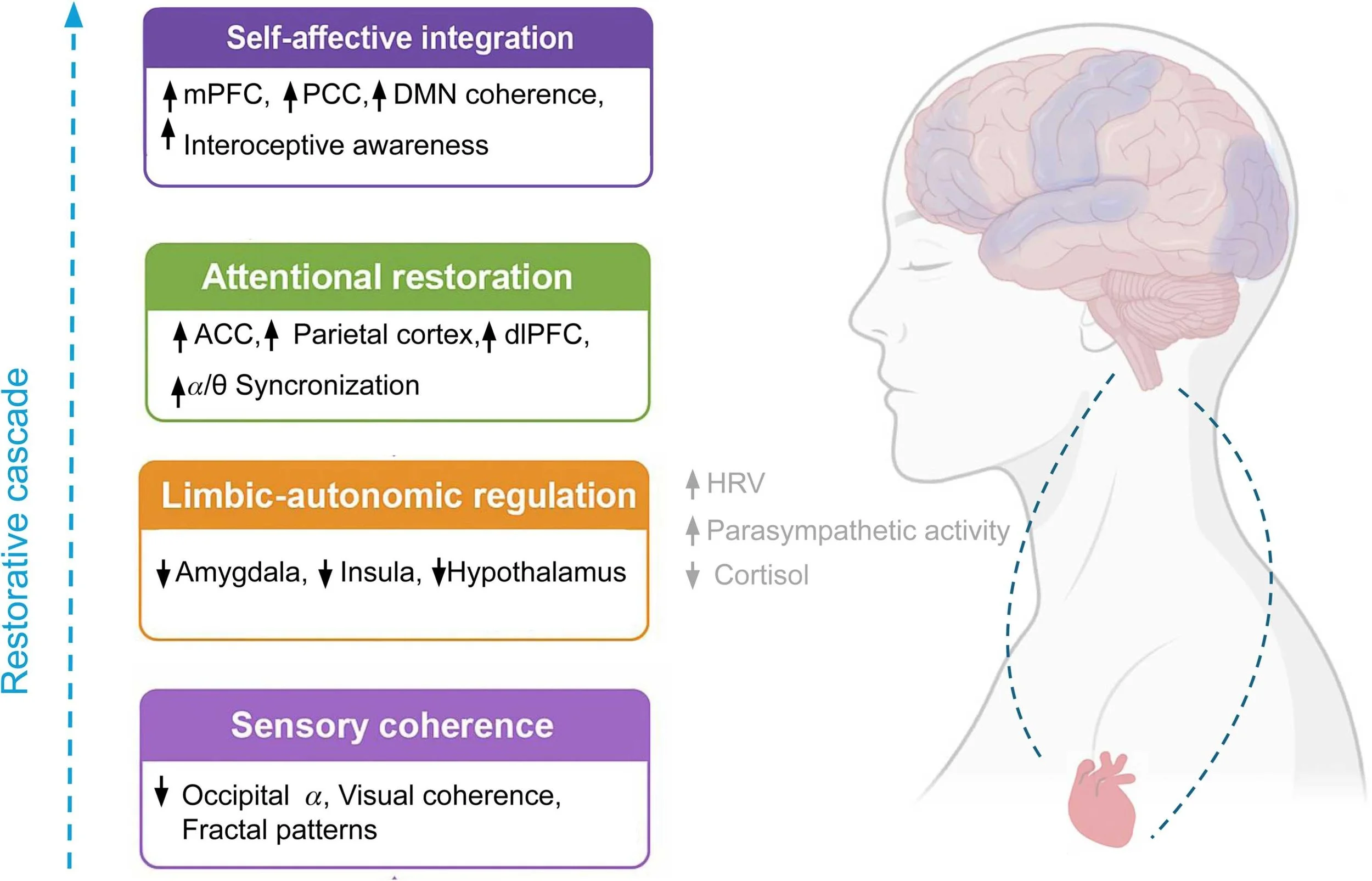
Baquedano, Constanza, et al. "Your brain on nature: A scoping review of the neuroscience of nature exposure." Neuroscience & Biobehavioral Reviews (2026): 106565.
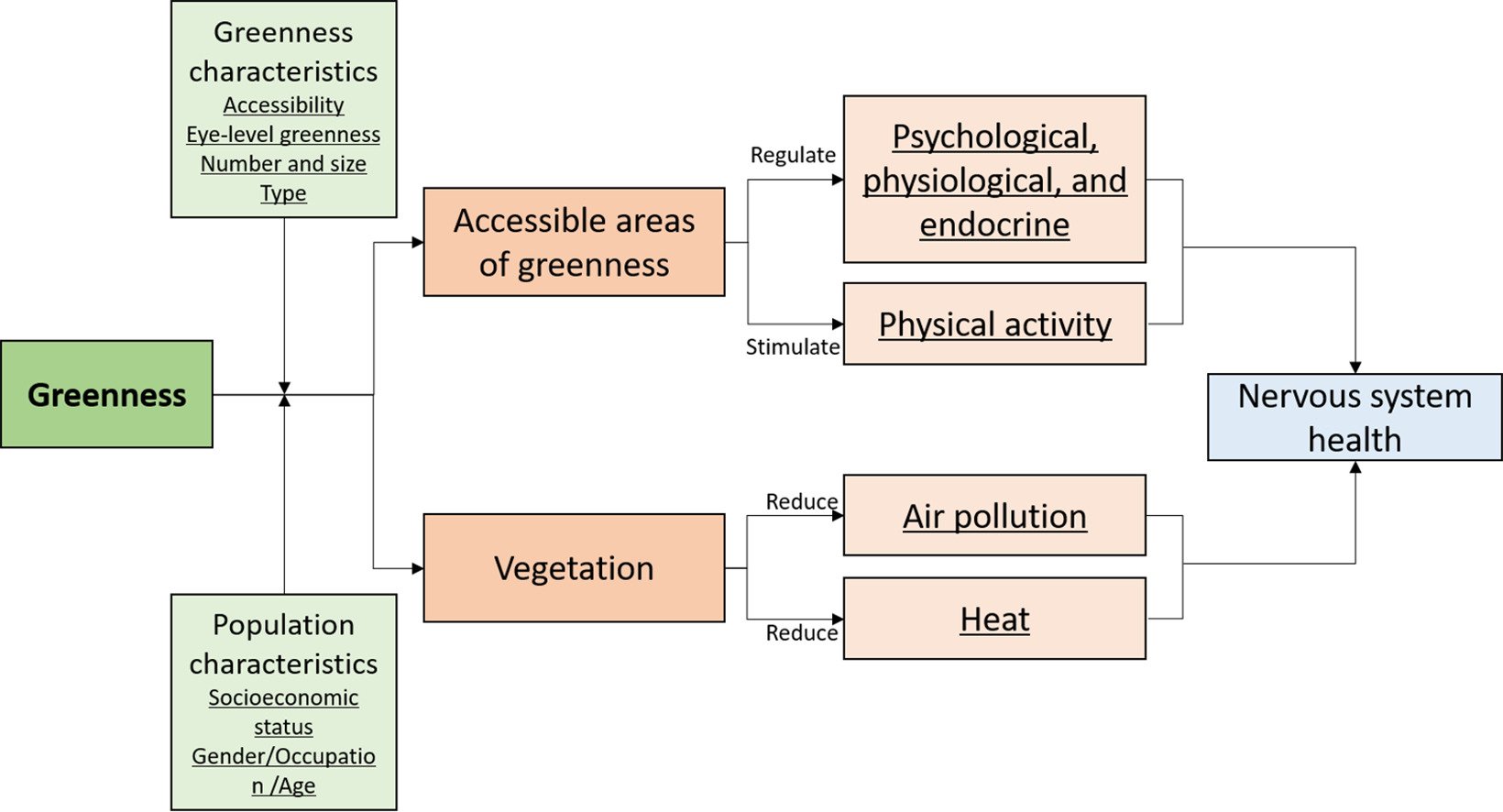
Li, Fangzheng, et al. "Global association of greenness exposure with risk of nervous system disease: A systematic review and meta-analysis." Science of the Total Environment 877 (2023): 162773.
Autonomic Nervous System
Heartbeats are not evenly spaced. The variation between them—heart rate variability, or HRV—provides information about autonomic regulation. Certain HRV measures, including RMSSD and high-frequency HRV, are influenced by parasympathetic activity. Nature exposure has repeatedly been investigated through this lens.
A 2026 randomized controlled trial compared a standardized 30-minute walk in an urban forest with an indoor control condition. The outdoor group experienced a greater increase in HRV-RMSSD alongside reductions in cortisol and improvements in mood and directed attention.[5]
Cardiovascular system
Blood pressure and heart rate are partly governed by the autonomic nervous system, and both appear responsive to environmental context. Experimental studies comparing greener and more urban environments have reported differences in cardiovascular physiology during or after exposure.
For example, a 2025 randomized trial involving older adults with hypertension found significantly lower systolic and diastolic blood pressure following a three-day forest intervention compared with an urban space.[6]
A crossover study of middle-aged adults similarly found more favourable HRV responses while walking in a green environment than while taking comparable walks through suburban surroundings.[7]
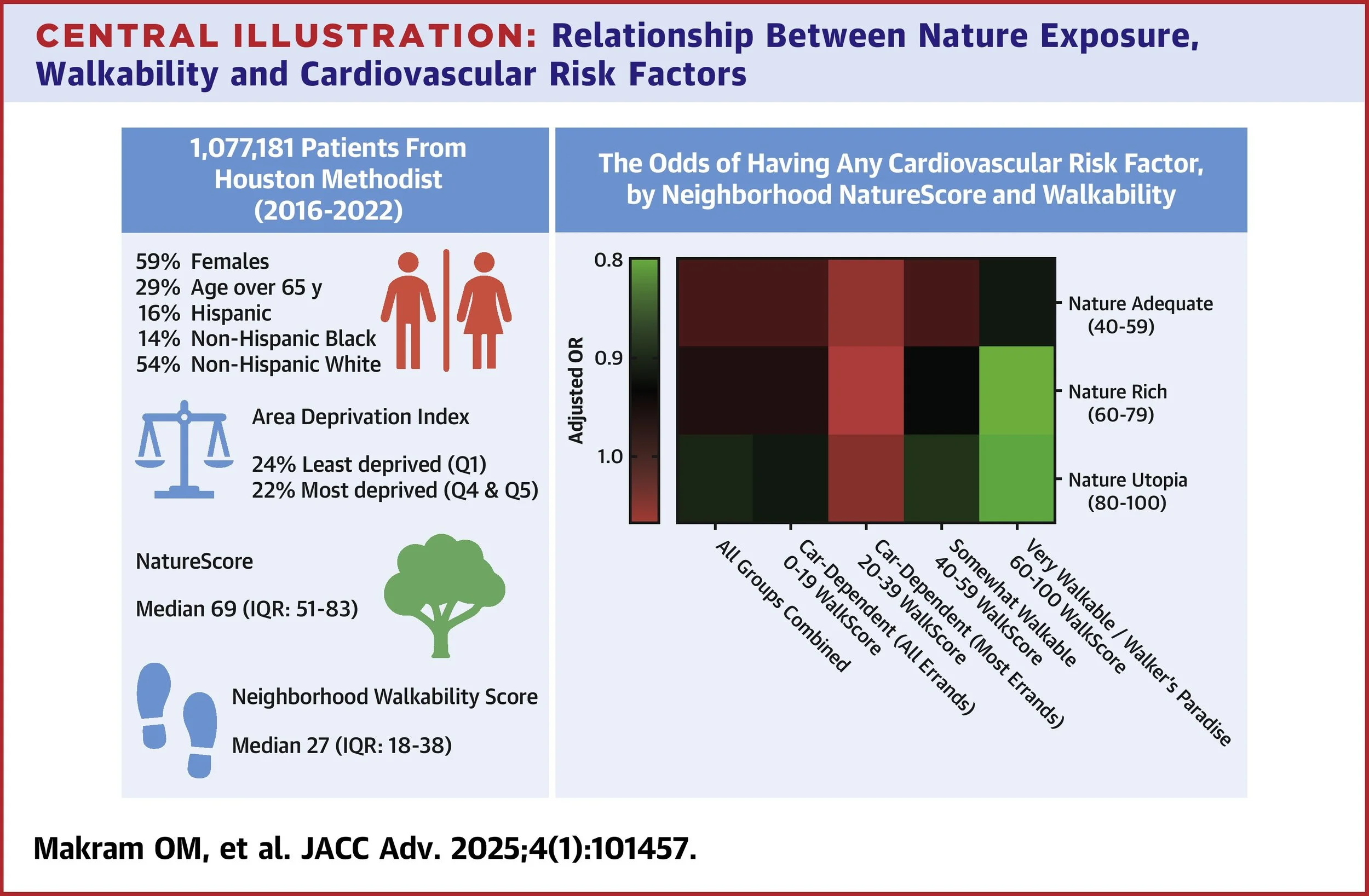
Makram, Omar M., et al. "Interplay between residential nature exposure and walkability and their association with cardiovascular health." JACC: Advances 4.1 (2025): 101457.
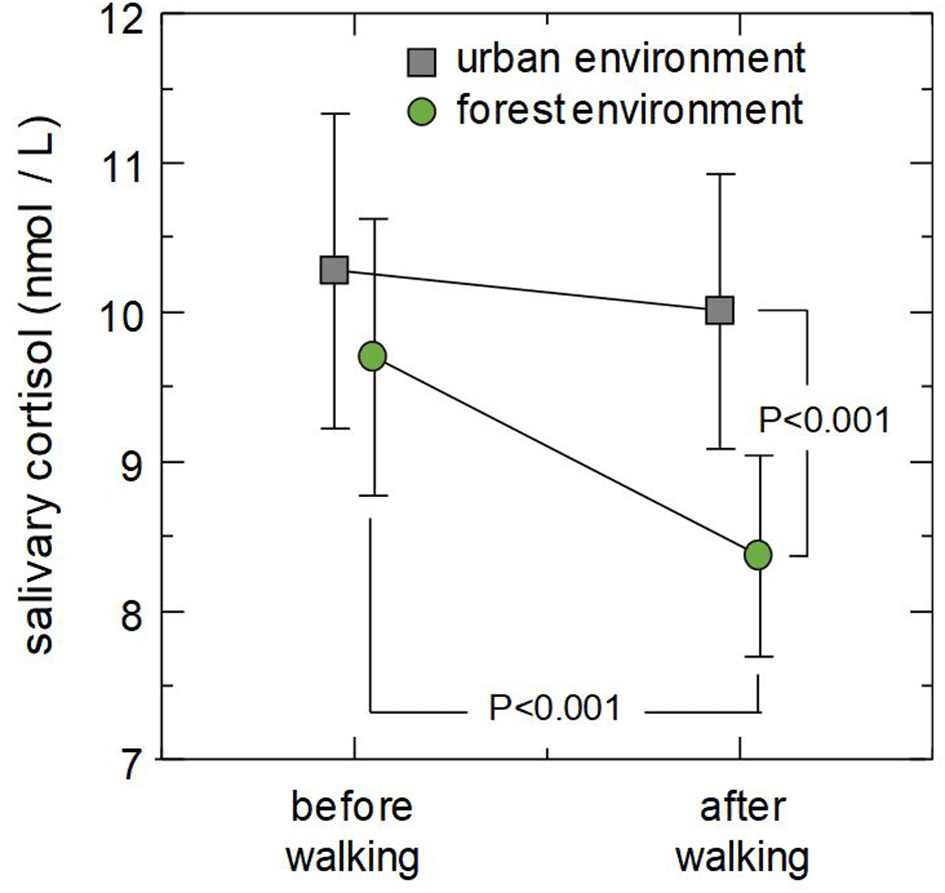
Kobayashi, Hiromitsu, et al. "Combined effect of walking and forest environment on salivary cortisol concentration." Frontiers in Public Health 7 (2019): 376.
Stress & Hormones
Nature reaches the endocrine system. One of the most commonly studied biomarkers in nature-health research is cortisol, part of the hypothalamic-pituitary-adrenal stress response.
In the 2026 randomized trial above, just 30 minutes of walking in an urban forest produced a greater reduction in salivary cortisol than the indoor comparison condition. The same experiment found parallel changes in HRV, mood and directed attention.[5]
Immune System & Forest Air
We breathe the chemistry of plants. Trees release hundreds of biogenic volatile organic compounds, including compounds known as terpenes. This has created one of the more fascinating, and still emerging, areas of nature-health research.
In a 2025 double-blind randomized crossover experiment, researchers had participants sit in a forest while breathing either ordinary forest air or air in which most terpenes had been filtered out. The researchers observed lower interleukin-6 ( less inflammation) and lower skin conductance (less stress) when participants breathed the forest air, providing evidence that airborne plant compounds may contribute to some of the health benefits of forests.[8]
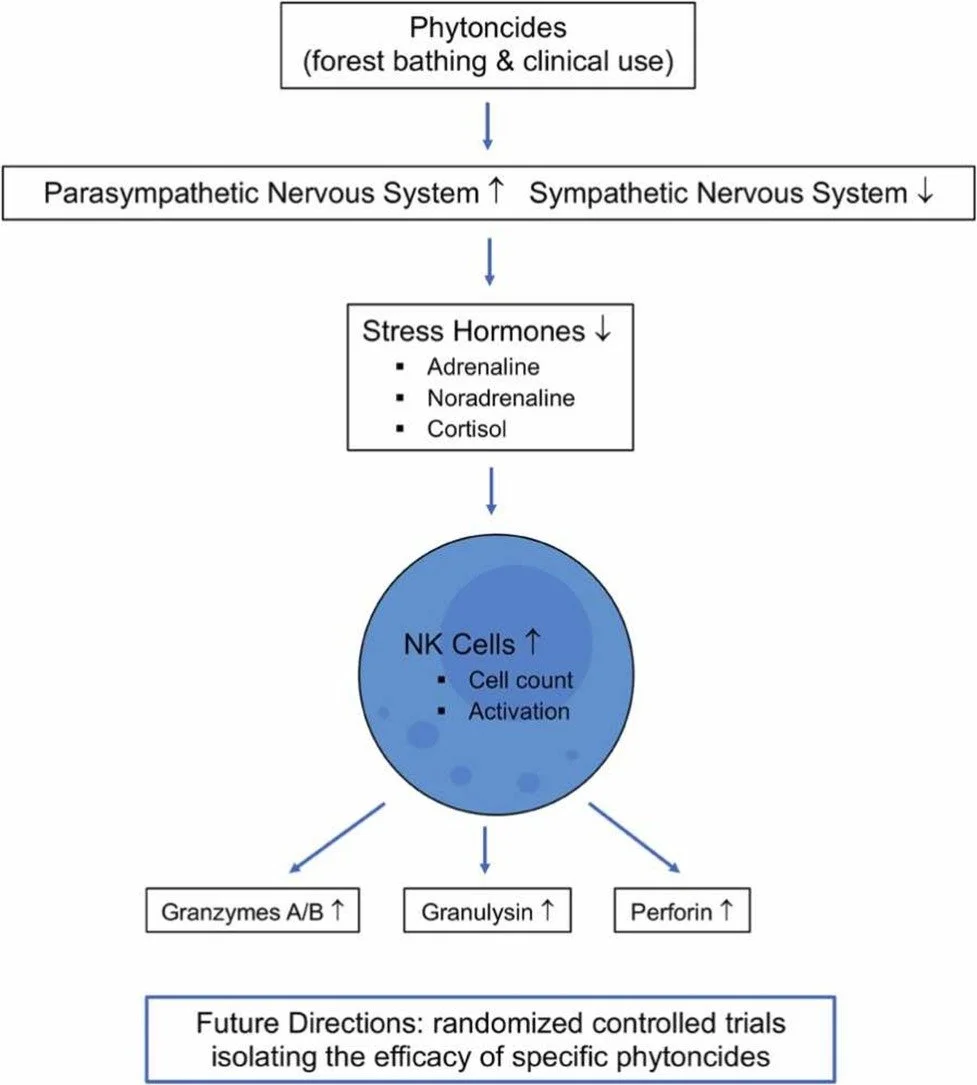
Lew, Tovan, and Kaitlyn J. Fleming. "Phytoncides and immunity from forest to facility: A systematic review and meta-analysis." Pharmacological Research-Natural Products 4 (2024): 100061.
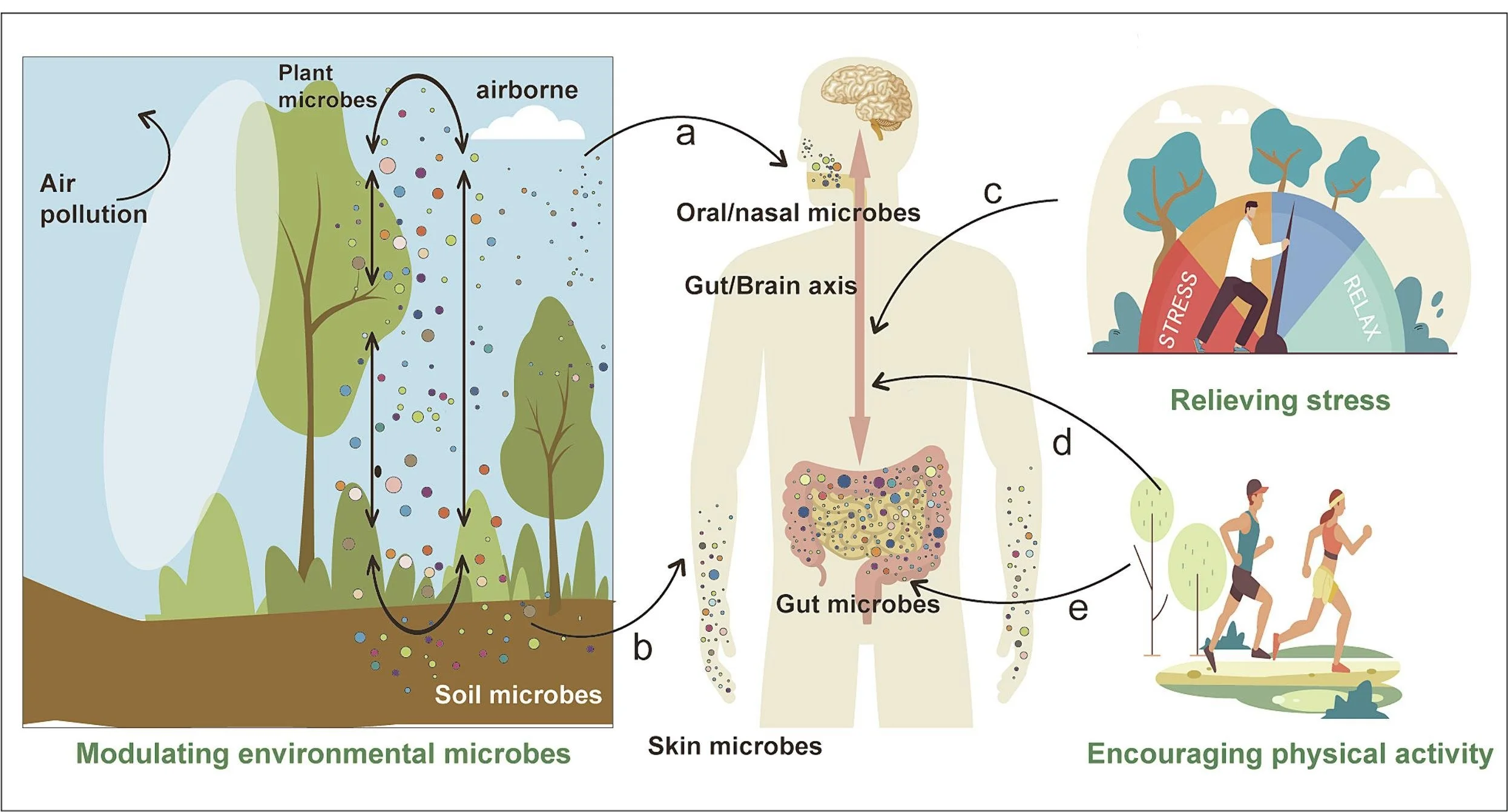
Zhang, Yi-Dan, et al. "Greenspace and human microbiota: a systematic review." Environment international 187 (2024): 108662.
Microbiome & Biodiversity
Humans carry ecosystems of microorganisms across the skin, airways and gastrointestinal tract. Increasingly, scientists are asking whether contact with biologically diverse environments influences these microbial communities.
In an experiment involving 57 children, researchers disrupted a small area of the skin microbiome and then exposed participants for 45 minutes to a classroom, sports field or biodiverse forest schoolyard. Outdoor environments, particularly the forest, more rapidly enriched and diversified the recovering skin microbiome. The effects accumulated over repeated exposures.[9]
Perhaps one cost of separating childhood from nature is that we are also separating the developing immune system from the microbial world it evolved alongside.
Psychological Wellbeing
Exposure is only part of the story. There is an important distinction between being around nature and feeling connected to nature. Nature connectedness describes the emotional and cognitive relationship people develop with the natural world. Arguably deeper than simply counting minutes outdoors.
A particularly useful 2026 study examined 36,803 people across 75 countries. Greater nature connectedness was positively associated with multiple dimensions of wellbeing, including purpose, hope, mindfulness, life satisfaction, resilient coping and optimism. Mindfulness showed one of the most consistent relationships. Only four of the countries studied failed to show a significant association between mindfulness and nature connectedness.
The cross-cultural consistency is striking. The authors concluded that the nature connectedness–wellbeing relationship could be detected across countries and may have particular relevance in more vulnerable settings.[10]
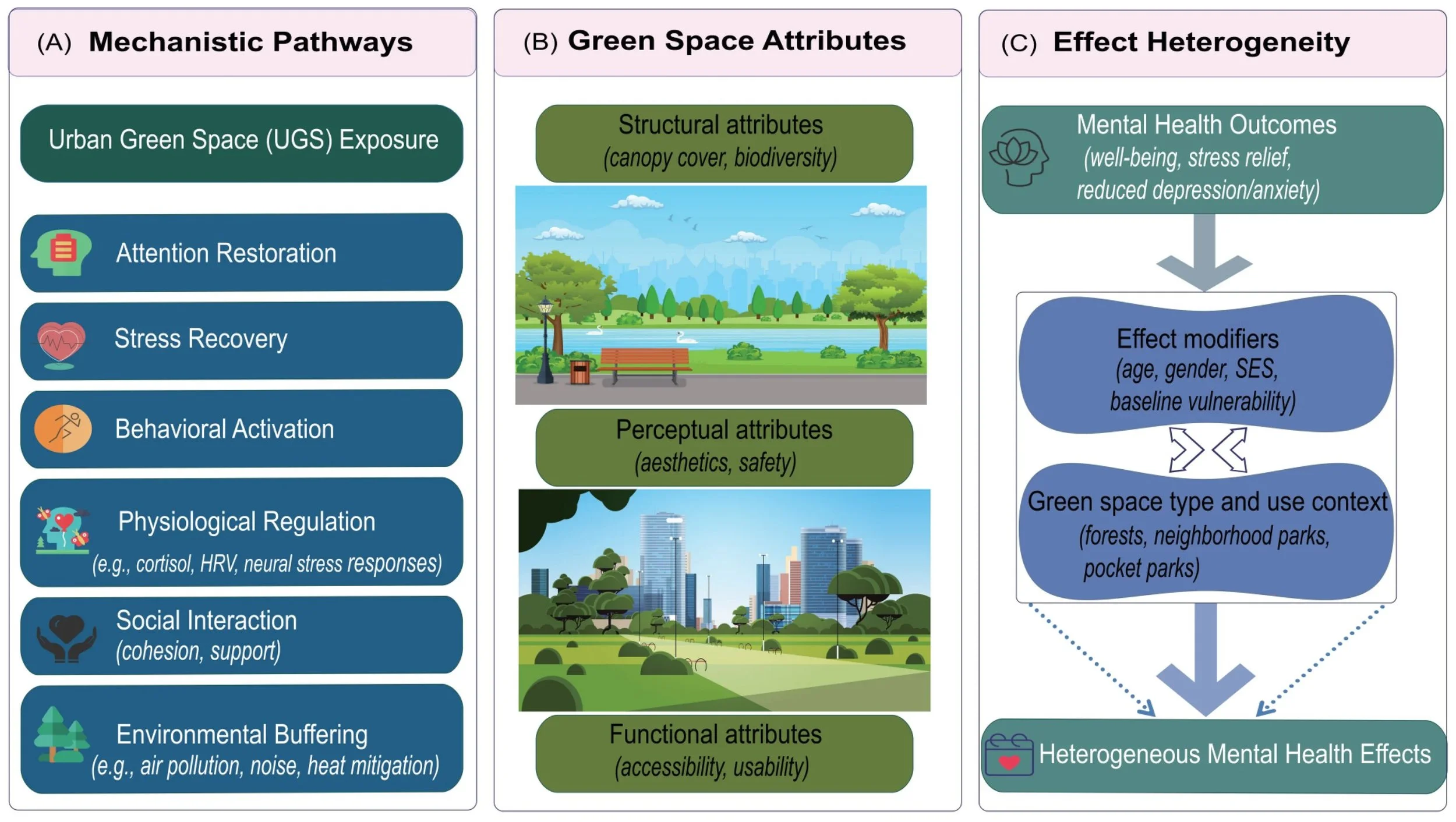
Wang, Jianying, et al. "Urban green space and mental health: Mechanisms, methodological advances, and governance pathways for sustainable cities." Sustainability 18(7) (2026).
One environment. Many pathways.
Nature does not interact with one isolated organ. A walk outside may simultaneously change:
the light reaching the eye
brain activity
nervous system regulation
heart rate variability
cortisol
attention and mood
At the same time, we may be breathing plant compounds, encountering environmental microorganisms, moving our bodies, escaping noise and heat, and strengthening a psychological relationship with the living world. That is why researchers increasingly describe nature exposure as a multisystem environmental exposure rather than a single intervention.
Frequently Asked Questions
How does nature exposure affect the nervous system?
Spending time in natural settings can help the body shift out of “fight-or-flight” mode and into a calmer, more restorative state. Studies have found changes in stress hormones, heart-rate patterns and activity in brain regions involved in stress.
Can being in nature lower blood pressure?
It can. Many studies show that time in forests and green spaces is associated with lower blood pressure and a calmer heart rate. The effect varies from person to person, but the overall pattern is encouraging.
Does nature stimulate the vagus nerve?
Possibly. The vagus nerve is an important part of the body’s “rest and recover” system. Researchers often look at heart-rate variability as one clue that this calming system is becoming more active. Nature exposure has been associated with healthier heart-rate variability, although we cannot say that nature directly “switches on” the vagus nerve.
Why is outdoor time important for children's eyesight?
Outdoor time appears to help protect children against becoming nearsighted. Bright outdoor light sends important signals to the developing eye that help regulate how the eyeball grows. Children who spend more time outdoors tend to have a lower risk of developing myopia.
Do trees release chemicals that affect our bodies?
Yes. Trees and other plants release natural airborne compounds, including substances called terpenes. When we spend time in a forest, we breathe some of these compounds in. Early research suggests they may play a role in some of the stress and immune effects associated with forest environments, although scientists are still working out exactly how much they matter.
Is nature exposure good for mental health?
Research consistently links time in nature, and feeling connected to the natural world, with better mental wellbeing. People who feel more connected to nature tend to report better mood, greater life satisfaction, more hope and a stronger sense of purpose. Nature is not a replacement for mental-health care, but it is a meaningful part of supporting wellbeing.
Photo by Michał Robak
References:
Abbott, Kaleb S., Hope M. Queener, and Lisa A. Ostrin. "The ipRGC‐driven pupil response with light exposure, refractive error, and sleep." Optometry and Vision Science 95.4 (2018): 323-331.
Akgun, Sena Gulsum, et al. "Light exposure and sleep architecture in real-world settings." npj Biological Timing and Sleep 3.1 (2026): 30.
He, Xiangui, et al. "Time outdoors in reducing myopia: a school-based cluster randomized trial with objective monitoring of outdoor time and light intensity." Ophthalmology 129.11 (2022): 1245-1254.
Sudimac, Sonja, Vera Sale, and Simone Kühn. "How nature nurtures: Amygdala activity decreases as the result of a one-hour walk in nature." Molecular Psychiatry 27.11 (2022): 4446-4452.
Yan, Sheng, et al. "Psychophysiological restoration in nature: a randomized controlled trial investigating the cognitive, affective, and physiological benefits of green exercise." Scientific Reports (2026).
Li, Aibo, et al. "Therapeutic effects of forest bathing on older adult patients with essential hypertension: evidence from a subtropical evergreen broad-leaved forest." Frontiers in Public Health 13 (2025): 1631613.
de Brito, Junia N., et al. "The effect of green walking on heart rate variability: A pilot crossover study." Environmental Research 185 (2020): 109408.
Levy, Chaja M., et al. "Forest terpenes and stress: Examining the associations of filtered vs. non-filtered air in a real-life natural environment." Environmental Research 276 (2025): 121482.
Mills, Jacob G., et al. "Schoolyard Biodiversity Determines Short-Term Recovery of Disturbed Skin Microbiota in Children: Schoolyard Biodiversity Determines Short-Term Recovery of Disturbed Skin Microbiota in Children." Microbial Ecology 86.1 (2023): 658-669.
Barbett, Lea, et al. "Nature connectedness and well-being: Evidence from a multi-national investigation across 75 countries." Journal of Environmental Psychology (2026): 102895.